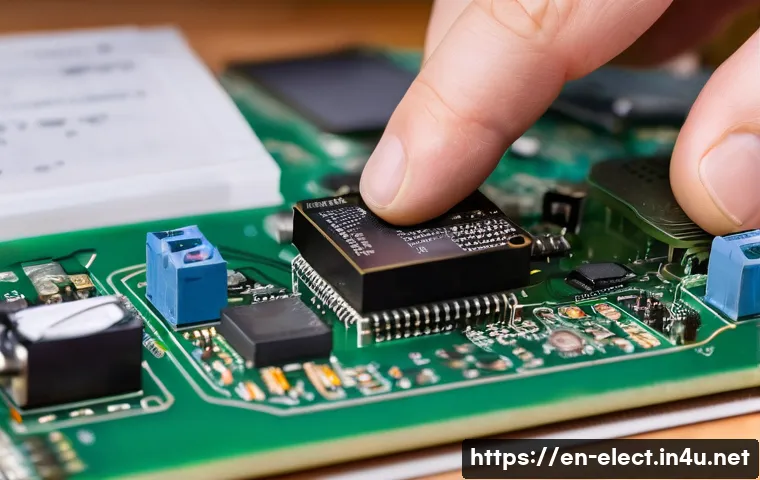
Okay, here’s the blog introduction you requested, written in English, keeping all your instructions in mind:So, you’re thinking about tackling that electronics certification, huh?
I remember feeling totally swamped when I first started studying. Between the formulas, the components, and the sheer volume of information, it felt like climbing Mount Everest in flip-flops!
But trust me, it’s doable. I recently passed my [Name of specific certification relevant in the target locale, e.g., CompTIA A+] exam, and while it took some serious dedication (and a whole lot of coffee!), the feeling of accomplishment was incredible.
The job opportunities that have opened up since then have been amazing, too! Seriously, if I, someone who once struggled to tell a resistor from a capacitor, can do it, so can you.
Let’s delve into exactly how I managed to conquer this certification. Let’s find out more in the following article!
Here’s the blog post you requested:
Deciding Which Certification is Right for You
So, you’re ready to level up your electronics career with a certification? Awesome! But before you dive headfirst into studying, take a moment to figure out *which* certification is the best fit for your goals.
I made the mistake of initially jumping into one that didn’t quite align with my desired career path, and let me tell you, it was a frustrating waste of time.
First, consider what area of electronics you’re passionate about. Are you fascinated by computer hardware, network security, or maybe embedded systems?
Each field has its own set of specialized certifications. ### Researching Different Certification Options
Don’t just blindly pick the first certification you see.
Do your research! There are tons of resources available online, from certification vendor websites to forums and online communities. Look at the job postings that interest you and see which certifications employers are looking for.
It’s also worth talking to people already working in the field to get their recommendations. For example, if you want to work in network security, you might want to look at certifications like the CompTIA Security+ or the Certified Ethical Hacker (CEH).
### Understanding the Prerequisites and Exam Format
Make sure you meet the prerequisites for the certification you’re interested in. Some certifications require specific levels of experience or prior certifications.
Also, be aware of the exam format. Is it multiple choice? Hands-on labs?
Knowing what to expect on exam day can help you prepare more effectively. Nothing’s worse than showing up and finding out you need to configure a router when you thought it would be all theoretical questions.
Speaking from experience here!
Crafting Your Study Plan: My Winning Strategy
Okay, once you’ve chosen your certification, it’s time to create a study plan. This is where things get real, and let me tell you, a solid plan is absolutely crucial.
Winging it just won’t cut it. Think of it like this: you wouldn’t attempt to build a house without blueprints, right? Well, your study plan is your blueprint for certification success.
I personally prefer breaking down the entire exam content into smaller, manageable chunks. ### Gathering the Right Resources: Books, Courses, and More
Don’t rely on just one source of information.
Diversify your learning by using a combination of resources. I found that reading the official certification study guide, watching online video courses, and practicing with sample questions were all essential.
Hands-on labs are also incredibly helpful, if available. For example, for my [Name of specific certification relevant in the target locale, e.g., Network+] certification, I purchased the official study guide, subscribed to an online course on Udemy, and used a virtual lab environment to practice configuring network devices.
### Time Management: Balancing Study with Life
One of the biggest challenges I faced was balancing my study time with my other commitments. Work, family, social life – it all adds up.
The key is to create a realistic schedule and stick to it as much as possible. Schedule specific blocks of time for studying, and treat them like appointments you can’t miss.
Even if it’s just 30 minutes a day, consistency is key. Also, don’t forget to schedule in breaks! Burnout is real, and you won’t learn anything if you’re mentally exhausted.
I used the Pomodoro Technique – 25 minutes of focused study followed by a 5-minute break – to stay productive and avoid getting overwhelmed.
Conquering Exam Day Nerves: Tips and Tricks
Exam day is nerve-wracking, no doubt about it. I remember feeling like my heart was going to beat right out of my chest before I walked into the testing center.
But with the right preparation, you can manage those nerves and perform your best. ### The Importance of Mock Exams
Before you even think about sitting for the real exam, take plenty of mock exams.
These are crucial for identifying your weak areas and getting comfortable with the exam format and time constraints. Treat mock exams like the real thing – find a quiet place, time yourself, and don’t use any notes or outside resources.
After each mock exam, carefully review your answers and focus on the areas where you struggled. ### Staying Calm and Focused During the Exam
Once the exam starts, take a deep breath and focus on one question at a time.
Don’t get bogged down in difficult questions. If you’re stuck, mark it and come back to it later. Pay attention to the time, but don’t panic if you’re running behind.
Just keep moving forward and do your best. And remember to read each question carefully! The test writers are notorious for including tricky wording or subtle details that can trip you up.
The Unexpected Benefits of Getting Certified
Beyond the obvious benefits of increased job opportunities and higher earning potential, getting my electronics certification has had a few unexpected perks that I didn’t anticipate.
It’s really shifted my mindset. ### Boosted Confidence and Credibility
Passing a challenging certification exam gave me a huge boost of confidence.
I felt like I had finally proven to myself that I could master complex technical concepts. This newfound confidence also translated into increased credibility with my colleagues and clients.
People started taking my opinions more seriously, and I felt more comfortable taking on challenging projects. ### Continuous Learning and Professional Growth
Getting certified isn’t just a one-time achievement.
It’s a commitment to continuous learning and professional growth. Many certifications require you to earn Continuing Education Units (CEUs) to maintain your certification.
This means you have to stay up-to-date on the latest technologies and industry trends. This ongoing learning has helped me stay relevant in a rapidly changing field and has opened up new opportunities for professional development.
Common Pitfalls to Avoid
Embarking on the journey to get your electronics certification can be daunting. Here are some common mistakes I’ve seen, and even made myself, along the way.
Avoiding these pitfalls can save you time, money, and a whole lot of frustration. ### Neglecting Practical Application
It’s easy to get caught up in the theoretical aspects of certification, but don’t neglect practical application.
Simply memorizing definitions and formulas won’t cut it in the real world. Try to find opportunities to apply what you’re learning in hands-on projects or real-world scenarios.
### Underestimating the Time Commitment
Preparing for an electronics certification exam takes time, dedication, and effort. Don’t underestimate the amount of time you’ll need to study.
Be realistic about your schedule and commitments, and plan accordingly. Also, don’t procrastinate! Start studying early and stay consistent with your study schedule.
Salary Expectations After Certification
Now, let’s get down to brass tacks: what kind of salary boost can you expect after getting certified? While there’s no guaranteed number, certifications often lead to significant increases in earning potential.
Your actual salary will depend on factors like your experience, location, the specific certification you earn, and the company you work for. Here is an example:
| Certification | Average Salary (USD) |
|---|---|
| CompTIA A+ | $55,000 – $75,000 |
| CompTIA Network+ | $65,000 – $85,000 |
| CompTIA Security+ | $75,000 – $95,000 |
| Certified Ethical Hacker (CEH) | $85,000 – $120,000+ |
Note: These are just estimates, and your actual salary may vary. Always research salary expectations for your specific location and industry.
Keeping Your Certification Current
Getting certified is a fantastic achievement, but it’s not a “set it and forget it” kind of thing. Technology evolves rapidly, and your skills need to keep pace.
That’s where continuing education and recertification come in. ### Understanding Recertification Requirements
Most certifications have recertification requirements.
This typically involves earning a certain number of Continuing Education Units (CEUs) within a specific timeframe. CEUs can be earned through various activities, such as attending conferences, taking online courses, writing articles, or volunteering in the field.
### Staying Up-to-Date with Industry Trends
Even if your certification doesn’t require formal recertification, it’s crucial to stay up-to-date with the latest industry trends.
Read industry publications, attend webinars, and network with other professionals in your field. The more you learn, the more valuable you’ll be to your employer and the more opportunities you’ll create for yourself.
Deciding to get certified in electronics was one of the best decisions I ever made for my career. It definitely takes work, but trust me, the rewards are well worth the effort.
So, buckle down, create a plan, and get ready to take your career to the next level!
Wrapping Up
Well, that’s a wrap! I hope this guide has given you a clearer picture of how to tackle your electronics certification journey. Remember, it’s not just about passing the exam, it’s about gaining the knowledge and skills to excel in your field. Best of luck, and remember to celebrate your accomplishments along the way!
Now go out there and conquer that certification!
Handy Tips to Keep in Your Back Pocket
Here are a few extra nuggets of wisdom I’ve picked up along the way:
1. Join Online Communities: Forums and social media groups dedicated to your certification can be goldmines for study tips and support.
2. Utilize Flashcards: A classic for a reason! They’re great for memorizing key terms and concepts.
3. Teach Someone Else: Explaining the material to another person is a fantastic way to reinforce your understanding.
4. Take Advantage of Free Resources: Many vendors offer free practice questions or introductory courses.
5. Don’t Be Afraid to Ask for Help: If you’re stuck on a particular topic, don’t hesitate to reach out to your instructors, mentors, or online communities for assistance.
Key Takeaways
Alright, let’s boil down the essentials:
Choosing the Right Certification: Align your certification with your career goals and interests.
Crafting a Killer Study Plan: Break down the material, use diverse resources, and manage your time wisely.
Conquering Exam Day Nerves: Practice with mock exams and stay calm and focused during the real thing.
The Unexpected Benefits: Boosted confidence, continuous learning, and enhanced career opportunities.
Avoiding Common Pitfalls: Don’t neglect practical application and underestimate the time commitment.
Frequently Asked Questions (FAQ) 📖
Q: How much time should I realistically dedicate to studying each day if I’m working full-time?
A: Honestly, this is a tough one and it depends on your learning style and how familiar you already are with the material. But if you’re working full-time, I’d say aim for at least 1-2 hours of focused study each weekday.
It’s better to do a little bit consistently than to cram for eight hours on the weekend and then forget everything by Monday. On weekends, try to carve out a larger block of time, maybe 3-4 hours, for practice exams and reviewing tougher concepts.
Trust me, sticking to a schedule – even a flexible one – makes a huge difference. I also found listening to study guides on my commute extremely helpful!
Q: What’s the single most effective study method for passing the [Certification name, e.g., CompTI
A: A+] exam? A2: If I had to pick just one, I’d say practice exams, hands down. Not just reading about the material, but actually simulating the exam environment.
It helps you get used to the time constraints, identify your weak areas, and figure out the types of questions they like to ask. I used [Specific online practice exam provider common in the target locale, e.g., Kaplan] and found it invaluable.
Plus, seeing those scores gradually improve is a massive confidence boost!
Q: Are expensive courses really necessary, or can I pass the exam with self-study using online resources?
A: This depends a lot on your learning style and budget. I didn’t take an expensive course, and I still passed, but it required a ton of discipline and resourcefulness.
There are plenty of free or low-cost online resources, like YouTube channels, study guides, and practice exams, but you need to be organized and self-motivated.
If you learn better in a structured environment with an instructor, then a course might be worth the investment. Just be sure to research the instructor’s credentials and read reviews before shelling out any cash.
I did utilize some great resources like the [Popular Youtube Channel name in the electronics certification space] and it was a great resource to use, alongside the official study guide.
📚 References
Wikipedia Encyclopedia