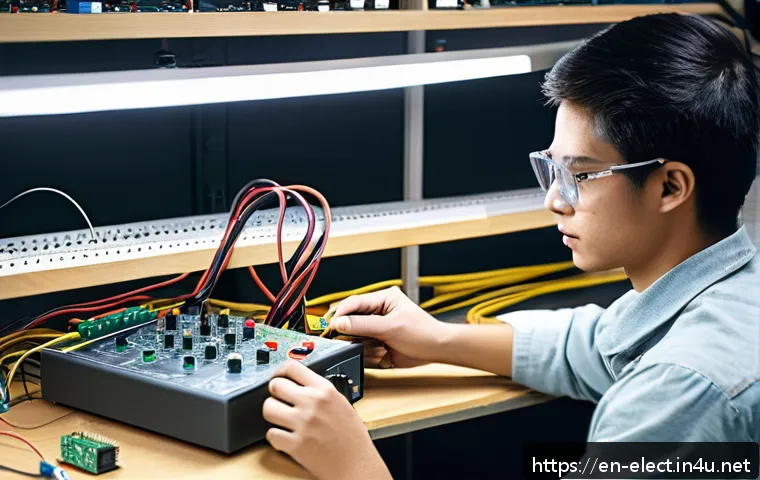
Prepare for an electronics job interview by reviewing the technical skills named in the job description, practicing a clear troubleshooting process, and preparing honest project examples.

Paid courses, certification preparation, resume reviews, or mock interview coaching can be useful when they address a specific gap rather than serving as a general shortcut.
Most interviews look for fundamentals such as circuit behavior, measurements, components, and fault isolation, along with safety awareness and communication.
The best preparation differs for technician, test, manufacturing, hardware, embedded, and field-service paths. Use your target role to decide whether self-study is enough or whether structured electronics training would add practical value.
Focus on showing how you think, document work, ask questions, and handle uncertainty.
At a Glance
- Study the technical topics, tools, and responsibilities repeated in the job description.
- Prepare project stories that show your troubleshooting steps, safety awareness, and communication.
- Consider paid training, certification preparation, or interview coaching only when it fits a clear role-specific gap.
| Preparation Option | Best Fit | Cost Consideration | What It Can Demonstrate |
|---|---|---|---|
| Self-study | Clear job requirements and a narrow knowledge gap | Usually the lowest commitment | Technical understanding when supported by strong examples |
| Structured electronics course | Repeated skill gaps across target roles | Varies by depth, format, and practical access | Focused learning and, in some cases, documented completion |
| Certification preparation | Roles that repeatedly mention a relevant credential or standard | Compare exam, learning-material, and renewal requirements | A credential, if relevant to the employer and role |
| Mock interview or resume review | Solid knowledge but unclear interview delivery or weak targeting | Compare scope, reviewer background, and feedback format | Clearer communication and better job-specific presentation |
What Employers Usually Want to See in an Electronics Interview
Employers commonly look for technical foundations, structured troubleshooting, and clear communication. You do not need to present yourself as knowing every tool or circuit type. You do need to show how you would approach a problem responsibly, use available information, and communicate what you found.
The Three Priorities: Technical Foundations, Structured Troubleshooting, and Clear Communication
Expect questions involving Ohm’s law, circuit behavior, component choices, measurement tools, and fault isolation. A useful answer explains your sequence: review the symptoms, confirm safe conditions, check the most relevant measurements, compare results with expected behavior, and document the outcome. Avoid jumping directly to a conclusion without evidence.
A Fast Preparation Checklist for the Week Before an Interview
- Highlight repeated technical terms in the job description.
- Review the purpose and safe use of the measurement tools named or implied.
- Prepare two or three project stories with a clear problem, action, and result.
- Practice explaining a failed test, mistake, or design change without blame or exaggeration.
- Prepare questions about tools, onboarding, documentation practices, and performance expectations.
How to Use the Job Description as Your Study Map
Create a simple worksheet with four columns: repeated skill, evidence you have, gap to review, and interview example. If a listing repeatedly refers to test procedures, documentation, or measurement equipment, those topics deserve more attention than unrelated material. This approach also helps you decide whether an electronics training course or certification preparation is relevant.
Build a Role-Specific Technical Study Plan
Your preparation should match the work you want to do. A broad review is useful, but role-specific examples make your answers more credible. Do not assume that every electronics employer uses the same tools, test depth, or interview format.
Technician and Field-Service Roles: Diagnostics, Meters, Safety, and Customer Communication
For technician and field-service positions, focus on diagnostics, meter use, fault isolation, component replacement decisions, and safe work habits. Be ready to explain how you would communicate a finding to a customer, teammate, or supervisor. If you have repair work or lab experience, describe the symptom, what you measured, what you ruled out, and how you documented the next step.
Test and Manufacturing Roles: Procedures, Quality Checks, Documentation, and Root-Cause Thinking
Test and manufacturing employers may value careful procedure-following, quality checks, repeatable measurements, and clear records. Show that you can distinguish an observation from an assumption. When discussing a failure, explain how you would confirm the issue, follow the applicable process, and escalate or collaborate when needed.
Hardware and Embedded Roles: Circuits, Design Trade-Offs, Debugging, and Collaboration
Hardware and embedded roles can emphasize circuits, component selection, debugging, design trade-offs, and collaboration with adjacent teams. Prepare to discuss why a design choice was made, what constraint affected it, and how testing changed your understanding. Be precise about your own contribution when describing group work.
Compare Self-Study, Courses, Certifications, and Interview Coaching
The right preparation investment depends on the gap between your current evidence and the target role. Relevance matters more than a long list of credentials. A course or service should help you demonstrate a skill the employer is likely to care about.
Comparison Table: Cost Commitment, Time Requirement, Proof of Skill, and Best-Fit Candidate
Self-study works well when job requirements are specific and you only need to refresh fundamentals or practice explanations. Structured training can make sense when several target listings reveal the same technical gap. Certification preparation may be useful when a credential is consistently relevant, while mock interview coaching or a resume-review service can help when your experience is stronger than your presentation.
When a Paid Electronics Course Is Worth Considering
Consider a paid electronics course when job descriptions repeatedly request skills you cannot currently demonstrate through school, projects, internships, repair work, or prior employment. Before enrolling, check the course outcomes, practical work, technical level, instructor background, and whether the material matches technician, test, hardware, manufacturing, or field-service work. A course with broad content may not be the best fit for a narrow interview need.
How to Evaluate Certifications and Mock-Interview Services Before Paying
For certification preparation, verify whether the credential is actually mentioned or valued in your target roles. For technical interview coaching, look for feedback that is specific to your role, project explanations, and troubleshooting communication. For a resume review service, check whether the reviewer can help you connect your experience to the job description without inflating claims. Review the official details, scope, and conditions on the relevant provider page before committing.
Answer Technical and Troubleshooting Questions With Evidence
A strong technical answer is not just a correct fact. It shows a safe, repeatable decision process. Use the information available, state what you would verify, and avoid claiming results you cannot support.

Explaining a Circuit, Test Result, or Fault-Isolation Process Step by Step
Start with the stated symptom or requirement. Then explain the checks you would perform, the tool or observation that supports each check, and what each result would tell you. For example, rather than saying “I would replace the component,” explain how you would isolate the fault and why that action would be appropriate after verification.
Turning School Labs, Repair Work, Prototypes, and Internships Into Credible Project Stories
Use a project-story checklist: context, responsibility, technical objective, method, evidence, outcome, and lesson learned. Include the limits of your role in a team project. A clear statement such as “I performed the measurements and documented the results for the team” is more credible than a vague claim of having “led everything.”
Common Technical Interview Mistakes: Guessing, Skipping Safety, and Claiming Unsupported Results
If you do not know an answer, do not invent one. Explain how you would find the needed information or what you would test first. Skipping safety considerations can also weaken an otherwise technical answer. Finally, avoid unsupported performance claims, especially when discussing prototypes, repairs, or group projects.
Prepare for Behavioral, Safety, and Teamwork Questions
Behavioral questions help employers understand how you work when communication, documentation, mistakes, or priorities become difficult. Your examples should be specific, professional, and consistent with your actual experience.
Using STAR Without Making Your Answer Sound Scripted
Use Situation, Task, Action, and Result as a quiet structure rather than a speech template. Give enough context to make the problem understandable, describe your actual actions, and finish with the result or what you learned. Keep technical details relevant to the question.
Discussing Errors, Failed Tests, and Design Changes Professionally
A failed test can be a strong example if you explain what happened, how you checked the evidence, how you communicated it, and what changed afterward. Focus on accountability and process improvement. Do not blame teammates or present an uncertain diagnosis as fact.
Questions to Ask About Tools, Onboarding, Training Budgets, and Performance Expectations
Ask which tools and documentation systems the team uses, how new hires are trained, what early success looks like, and how technical work is reviewed. You can also ask whether the employer supports role-relevant training or certification preparation. These questions help you evaluate fit while showing practical interest in the work.
Selection Criteria and Comparison Summary
Choose based on the evidence you need most: technical knowledge, practical proof, targeted credentials, or stronger delivery. Use self-study when the skill gap is narrow and the job requirements are clear. Consider structured training when multiple listings show the same missing skill. Consider a certification only when it fits the target path, and consider interview coaching or resume review when your knowledge is sound but your examples are unclear. Compare course content, credential relevance, reviewer expertise, practical assignments, and total commitment before paying. Official program details and service conditions should be checked on the relevant provider page.
Closing Thoughts
Electronics interview preparation works best when it is targeted rather than generic. Match your technical review to the role, turn real work into clear evidence, and practice explaining how you troubleshoot safely. A paid option can support your preparation, but it cannot replace accurate examples and role-focused study. Keep your claims precise and your questions practical.
Useful Information to Keep in Mind
Job descriptions are preparation tools: repeated skills, equipment, and responsibilities are useful signals for what to review. Documentation matters: explain how you recorded findings or communicated handoffs. Different roles prioritize different evidence: a field-service example may not be the strongest example for an embedded role, and vice versa.
Important Notes
Interview format, technical depth, panel size, tests, qualification requirements, clearance rules, and local standards vary by employer and position. A course, certification, coach, or resume-review service cannot guarantee an interview or hiring outcome. Confirm the requirements for each job directly with the employer and verify the scope of any paid preparation service before purchasing.
Frequently Asked Questions
Q1. What technical questions should I expect for an electronics technician interview?
A1. You may be asked about fundamentals such as Ohm’s law, circuit behavior, components, measurement tools, and fault isolation. Prepare to explain how you would diagnose an issue step by step, including safety checks and documentation.
Q2. Is a paid electronics certification worth it before applying for entry-level jobs?
A2. It may be worth considering when the credential is relevant to your target roles or appears repeatedly in job descriptions. Compare its content, requirements, total commitment, and relevance against your current experience before deciding.
Q3. Should I pay for a mock interview or resume review for a hardware or test engineering role?
A3. It can be useful when your technical knowledge is solid but you struggle to explain projects, connect your experience to the job, or answer troubleshooting questions clearly. Look for a service with role-relevant feedback and clear scope rather than a promise of a hiring result.