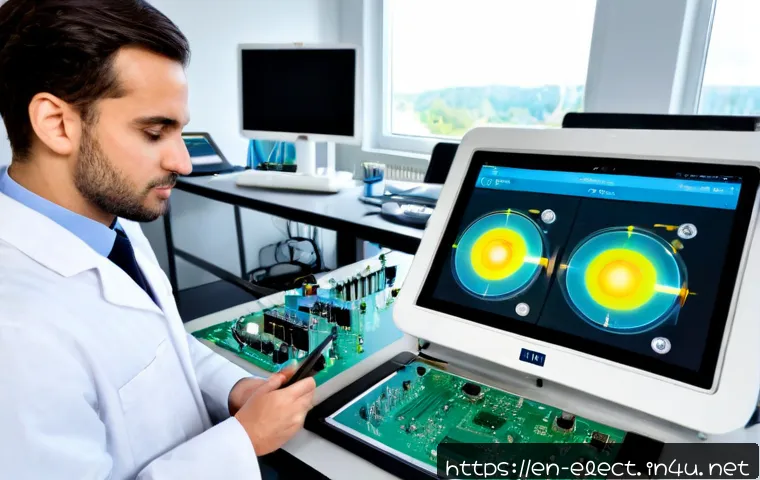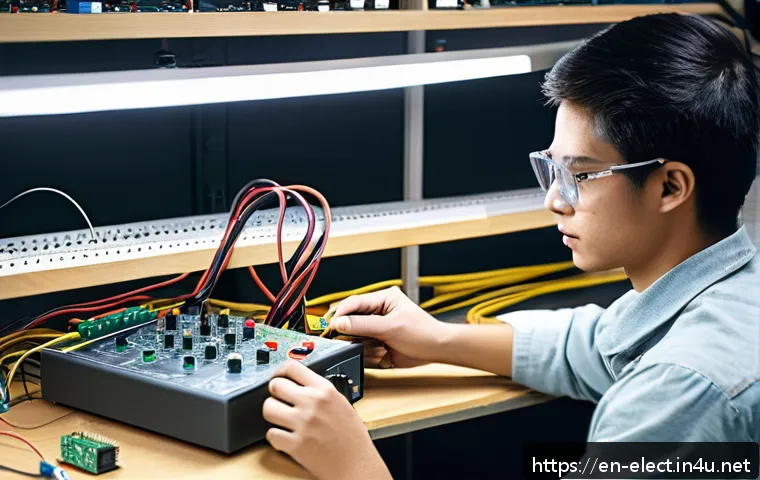
You know, I’ve spent years immersed in the world of electronics, seeing firsthand how quickly things evolve. It feels like just yesterday we were talking about basic circuit design, and now we’re deep into AI-powered gadgets and smart homes.
If you’re looking to carve out a successful career in this dynamic field, simply knowing the fundamentals won’t cut it anymore. The truth is, the skills that truly give you an edge have shifted dramatically.
I’ve personally observed what makes candidates stand out, and it’s not always what you’d expect. Forget just hardware; today, it’s about understanding the seamless dance between physical components and the code that brings them to life.
With the explosion of IoT, sustainable tech solutions becoming paramount, and cybersecurity threats looming large, employers are actively seeking individuals who aren’t just good at one thing, but who can connect the dots across multiple disciplines, truly seeing the bigger picture.
It’s an exciting, albeit challenging, landscape where adaptability and a passion for continuous learning are your greatest assets. Let’s truly unpack what’s needed to thrive in this thrilling domain.
You know, I’ve spent years immersed in the world of electronics, seeing firsthand how quickly things evolve. It feels like just yesterday we were talking about basic circuit design, and now we’re deep into AI-powered gadgets and smart homes.
If you’re looking to carve out a successful career in this dynamic field, simply knowing the fundamentals won’t cut it anymore. The truth is, the skills that truly give you an edge have shifted dramatically.
I’ve personally observed what makes candidates stand out, and it’s not always what you’d expect. Forget just hardware; today, it’s about understanding the seamless dance between physical components and the code that brings them to life.
With the explosion of IoT, sustainable tech solutions becoming paramount, and cybersecurity threats looming large, employers are actively seeking individuals who aren’t just good at one thing, but who can connect the dots across multiple disciplines, truly seeing the bigger picture.
It’s an exciting, albeit challenging, landscape where adaptability and a passion for continuous learning are your greatest assets. Let’s truly unpack what’s needed to thrive in this thrilling domain.
Embracing the Software-Hardware Symphony

Honestly, I can’t stress this enough: the days of being *just* a hardware engineer or *just* a software developer in electronics are fading fast. What I’ve personally witnessed is a dramatic shift towards a holistic understanding of how these two worlds intertwine. Think about it: every smart device, every piece of cutting-edge industrial machinery, relies on sophisticated code to breathe life into its circuits. You might design the most elegant PCB, but without robust, optimized firmware, it’s just a fancy paperweight. I remember a project where we had a brilliant hardware prototype, but the software team struggled to make it perform efficiently. It wasn’t until we bridged that gap, with hardware engineers learning basic programming principles and software folks getting their hands dirty with schematics, that we really started to fly. This isn’t about becoming an expert in both, but about having enough cross-disciplinary literacy to speak the same language, anticipate problems, and collaborate seamlessly. It’s about seeing the entire system, not just your piece of it. Employers aren’t just looking for someone who can solder; they want someone who understands the data flow from a sensor, through a microcontroller, and up to the cloud.
1. The Crucial Role of Embedded Systems Programming
If you’re not comfortable with C/C++ or Python for embedded applications, you’re missing a massive piece of the puzzle. My own journey saw me go from purely analog design to realizing that if I wanted to innovate, I needed to command the microcontrollers that drive these systems. It’s one thing to design a voltage regulator; it’s another entirely to write the power management algorithm that makes a device last for weeks on a single charge. This involves more than just coding; it’s about understanding real-time operating systems (RTOS), memory management in constrained environments, and interrupt handling. It’s a challenging but incredibly rewarding area, where your code directly dictates the physical world’s behavior. I’ve seen projects fail not because of hardware flaws, but because the embedded software was inefficient or buggy. Mastering this skill gives you direct control over your creations, allowing you to optimize performance, power consumption, and overall functionality in ways hardware alone simply cannot.
2. Navigating Modern Development Environments and Tools
Gone are the days of just a breadboard and a soldering iron. Today’s electronics development often mirrors software development practices. This means getting comfortable with version control systems like Git, collaborative development platforms, and integrated development environments (IDEs) tailored for embedded systems. I can tell you from experience, trying to manage a complex project without Git is like trying to build a house without a blueprint – it’s a recipe for disaster. Learning to debug across the hardware-software interface, using tools like oscilloscopes in conjunction with software debuggers, is a skill that separates the pros from the hobbyists. It’s not just about knowing the tools, but understanding the methodologies behind them, such as continuous integration and agile development, which allow teams to iterate faster and respond to challenges more efficiently. When you can seamlessly move between schematic capture, PCB layout, and then jump into writing and debugging firmware, you become an indispensable asset.
Mastering Connectivity for the IoT Revolution
The Internet of Things (IoT) isn’t just a buzzword; it’s fundamentally reshaping how we interact with technology and the world around us. From smart homes that anticipate your needs to industrial sensors optimizing factory floors, everything is becoming connected. For anyone in electronics, understanding these connectivity protocols and paradigms is no longer optional – it’s absolutely vital. I recall early IoT projects where the biggest headache wasn’t the device itself, but getting it to reliably talk to the cloud or other devices. The frustration of dealing with dropped connections or security vulnerabilities was immense, and it really hammered home just how critical robust connectivity skills are. This isn’t just about Wi-Fi or Bluetooth anymore; it’s a diverse ecosystem of low-power, long-range, and high-bandwidth solutions, each with its own quirks and optimal use cases. Being able to choose the right protocol for a given application, and then implement it securely and efficiently, makes you incredibly valuable in a world that’s constantly seeking new ways to connect everything.
1. Diving Deep into Wireless Protocols and Network Topologies
Think about the sheer variety: Wi-Fi for high-bandwidth home devices, Bluetooth Low Energy (BLE) for wearables, Zigbee and Z-Wave for home automation, and then LoRaWAN or NB-IoT for wide-area, low-power applications. Each has its strengths and weaknesses, and knowing when to deploy which is a true art. I once worked on an agricultural IoT sensor where battery life was paramount, and initially, we tried Wi-Fi, only to realize the power consumption would drain the battery in days. Switching to LoRaWAN, understanding its range, data rates, and message formats, extended the battery life to months. This experience taught me that theoretical knowledge of these protocols is good, but hands-on experience, understanding their practical limitations and deployment challenges, is what truly matters. It’s about designing a system that works reliably in the real world, not just on paper. Employers want people who understand signal integrity, antenna design principles, and how to troubleshoot connectivity issues in the field.
2. Cloud Integration and Data Orchestration
A connected device is only as useful as the data it collects and how that data is processed. This brings us to the cloud. Understanding how devices communicate with cloud platforms like AWS IoT, Google Cloud IoT Core, or Azure IoT Hub is a critical skill. It’s not just about sending data; it’s about secure authentication, message queuing, data storage, and triggering actions based on that data. I often found myself bridging the gap between hardware engineers and cloud architects, translating the physical world’s data into cloud-friendly formats. Knowing how to use APIs, manage data streams, and even dabble in serverless functions (like AWS Lambda) can drastically accelerate development and make you an indispensable part of an IoT team. This is where the true value of IoT emerges – transforming raw sensor data into actionable insights, and that transformation often happens in the cloud. It’s about building end-to-end solutions, not just isolated devices.
The Green Imperative: Sustainable Electronics and Circular Design
This is a topic that hits close to home for me, not just professionally, but personally. For too long, the electronics industry has operated on a linear “take, make, dispose” model, leading to massive e-waste problems. But things are changing, and rapidly. Companies are now intensely focused on sustainability, driven by both consumer demand and regulatory pressure. If you can contribute to making electronic products more eco-friendly, you’re not just doing good for the planet; you’re building a highly sought-after skill set. I’ve seen how much emphasis investors and consumers are placing on environmental impact, and frankly, it’s about time. Being able to design products that are energy-efficient, use sustainable materials, and are easier to repair or recycle offers a significant competitive advantage. This isn’t just a niche; it’s becoming a fundamental aspect of product development across the board. It requires a different way of thinking about the entire product lifecycle, from sourcing components to end-of-life management.
1. Energy Efficiency and Low-Power Design
Every joule matters. Designing for minimal power consumption is paramount, especially for battery-powered or perpetually-on devices. This goes beyond just picking low-power components; it involves intelligent power management, sleep modes, efficient algorithms, and optimizing system architecture. I remember one client who needed a sensor that could last a year on a small battery. It was a fascinating challenge that pushed us to rethink everything – from the micro-controller’s clock speed to the communication intervals. Success in this area isn’t just about saving energy; it extends product life, reduces operational costs, and makes devices more appealing to environmentally conscious consumers. It’s about understanding the subtle interplay between hardware design choices, firmware logic, and the overall application profile to squeeze every last drop of efficiency out of a system. When you can demonstrate a product that not only performs but sips power, you’re a hero.
2. Embracing Circular Economy Principles
The future of electronics is circular. This means designing products not just for function, but for longevity, repairability, and ultimately, recyclability. It’s about choosing materials that are less harmful, minimizing waste in manufacturing, and creating modular designs that allow for easy component replacement or upgrades. I’ve personally been involved in projects where we actively chose components that were widely recyclable or designed enclosures that could be easily disassembled with standard tools, rather than glued shut. This often meant slightly higher initial costs or more complex mechanical designs, but the long-term environmental benefits and brand reputation gains were invaluable. Understanding material science, lifecycle assessments, and design-for-disassembly principles will make you a pioneer in this space. This table illustrates some key differences in approach:
| Aspect | Traditional Linear Design | Circular Design Approach |
|---|---|---|
| Resource Use | Raw material extraction, high waste. | Renewable/recycled materials, waste minimization. |
| Product Lifespan | Planned obsolescence, single-use. | Durability, modularity, upgrades, repairability. |
| End-of-Life | Landfill, incineration, limited recycling. | Disassembly for reuse, remanufacturing, high-value recycling. |
| Cost Focus | Low upfront manufacturing cost. | Lifecycle cost optimization, long-term value. |
| Innovation Driver | New features, faster iterations. | Sustainability, resource efficiency, systemic change. |
Fortifying the Future: Cybersecurity in Embedded Systems
This is where things get really serious. In an increasingly connected world, every electronic device, from your smart thermostat to an industrial control system, represents a potential vulnerability. The headlines are full of data breaches and ransomware attacks, and the truth is, a significant portion of these stem from insecure embedded devices. As someone who’s seen the frantic scramble after a security vulnerability is discovered, I can tell you that baking security in from the start is non-negotiable. It’s no longer an afterthought or a “nice-to-have”; it’s a fundamental requirement. Employers are desperate for electronics professionals who understand the unique security challenges of constrained devices and can implement robust protection mechanisms. This isn’t just about protecting data; it’s about safeguarding critical infrastructure, personal privacy, and maintaining trust in technology. Neglecting security isn’t just irresponsible; it can have catastrophic real-world consequences.
1. Understanding Device-Level Security Vulnerabilities
Embedded systems have their own unique attack vectors. We’re talking about everything from physical tampering and side-channel attacks to insecure boot processes, unencrypted communication, and vulnerable firmware updates. I once consulted on a project where a simple, easily discoverable debugging port on a deployed device meant an attacker could gain root access. It was a terrifying realization that a small oversight could lead to such a massive breach. This area demands a deep understanding of common weaknesses like buffer overflows, insecure APIs, and default credentials. Knowing how to harden a device at the hardware level (e.g., secure boot, hardware trust anchors) and at the software level (e.g., secure coding practices, memory protection) is absolutely essential. It’s about thinking like an attacker to build an unassailable defense, anticipating every possible angle of exploitation.
2. Implementing Secure Communication and Data Protection
Once a device is connected, its communication becomes a prime target. Ensuring that data is encrypted, authenticated, and transmitted securely is paramount. This means familiarity with encryption protocols (like TLS/SSL), secure key management, and robust authentication mechanisms. I remember the sheer relief when we finally implemented a robust, mutual authentication system for a set of industrial IoT sensors; it felt like we’d finally closed a massive security hole. It’s not enough to just transmit data; you need to prove its origin and ensure its integrity. Furthermore, protecting data at rest, whether on internal flash memory or external storage, is just as crucial. Understanding techniques like secure data wiping and protecting sensitive information on the device itself rounds out this critical skill set. This proactive approach to security saves companies millions and protects their reputation in the long run.
From Concept to Creation: Prototyping and Agile Development
The world of product development moves at an exhilarating pace. You can’t afford to spend years perfecting a product in isolation only to discover it doesn’t meet market needs. This is why prototyping and agile methodologies are no longer just buzzwords from the software world; they’ve become indispensable in hardware and electronics. I’ve personally experienced the frustration of investing months into a design, only for an early user test to reveal a fundamental flaw. The painful lesson? Build, test, iterate, and learn fast. This iterative approach allows for rapid feedback cycles, early detection of issues, and continuous improvement. Employers aren’t just looking for someone who can design; they’re looking for someone who can bring ideas to life quickly, test them rigorously, and adapt to feedback with agility. This mindset is about minimizing risk, maximizing efficiency, and ultimately, getting innovative products into the hands of users faster.
1. Rapid Prototyping Techniques and Tools
Being able to quickly turn an idea into a tangible prototype is an incredible asset. This involves proficiency with tools like 3D printers for enclosures, accessible microcontroller platforms like Arduino or Raspberry Pi for quick proof-of-concepts, and simulation software. I can’t tell you how many times I’ve seen a complex problem unravel after a few hours of tinkering with an Arduino board and some off-the-shelf sensors. It’s about getting a minimal viable product (MVP) into existence to test core functionalities and user experience, long before committing to expensive manufacturing. This hands-on, experimental approach not only accelerates development but also fosters a deeper understanding of real-world constraints and opportunities. It’s about failing fast and learning faster, making mistakes cheaply, and transforming them into valuable insights.
2. Adapting Agile Methodologies for Hardware Development
Agile, once solely a software domain, is now making significant inroads into hardware. This involves breaking down large projects into smaller, manageable sprints, holding daily stand-ups, and constantly reviewing progress with stakeholders. I’ve found that while hardware has longer lead times for manufacturing, the principles of iterative development, continuous feedback, and adaptive planning are incredibly powerful. It means you’re not waiting for a 6-month design cycle to complete before getting feedback; you’re getting it weekly or bi-weekly. This dramatically reduces the risk of expensive redesigns late in the process. Understanding concepts like Scrum or Kanban, and knowing how to apply them to physical product development, will make you a highly effective and adaptable team member, capable of navigating the inevitable complexities of bringing a new electronic device to market.
Bridging the Gap: Communication and Interdisciplinary Collaboration
You know, in my years in this field, I’ve seen some incredibly brilliant minds struggle, not because they lacked technical prowess, but because they couldn’t effectively communicate their ideas or collaborate with others. Electronics projects today are rarely solo endeavors. They involve diverse teams: hardware engineers, software developers, mechanical designers, industrial designers, marketing, sales, and even legal teams. Being able to translate complex technical concepts into understandable language for non-technical stakeholders is a superpower. I remember a pivotal moment where a project almost stalled because the hardware team’s technical jargon completely lost the marketing department. It was only when we started using analogies and focusing on user benefits that everyone got on the same page. This isn’t just about being polite; it’s about ensuring everyone understands the vision, the constraints, and the progress, which directly impacts project success and team morale. Your technical skills are foundational, but your ability to connect with people elevates them.
1. Translating Technical Concepts for Diverse Audiences
Imagine explaining the nuances of an impedance-matched transmission line to someone who thinks “ohms” are a meditative chant. That’s the challenge! Being able to simplify, use analogies, and focus on the “why it matters” rather than just the “how it works” is incredibly valuable. This includes clear documentation, concise presentations, and the ability to articulate problems and solutions effectively in meetings. I’ve found that practicing summarizing complex ideas in a few sentences, or drawing simple diagrams, can make a world of difference. This skill builds trust and ensures that decisions are made with a complete understanding of the technical implications, rather than in a vacuum. It empowers the whole team to move forward with confidence and clarity, avoiding costly misunderstandings down the line.
2. Effective Cross-Functional Teamwork and Conflict Resolution
Collaboration is more than just sitting in the same room; it’s about actively listening, sharing ideas, providing constructive feedback, and sometimes, navigating disagreements. In a multi-disciplinary electronics project, conflicts can arise from different priorities (e.g., cost vs. performance, time-to-market vs. perfection). Being able to mediate, find common ground, and prioritize the overall project goals over individual preferences is crucial. I once had to facilitate a tense discussion between the mechanical and electronics teams over PCB size constraints. By listening to both sides, identifying the root causes of their concerns, and proposing a compromise, we found a solution that ultimately benefited the product. Strong interpersonal skills, empathy, and a solutions-oriented mindset turn a group of individuals into a high-performing team. These “soft skills” are often the hardest to master, but they are absolutely essential for leadership and driving innovation in a collaborative environment.
Staying Ahead of the Curve: Lifelong Learning in a Rapidly Evolving Field
If there’s one constant in the electronics industry, it’s change. What was cutting-edge yesterday can be obsolete tomorrow. The pace of innovation is relentless, driven by advancements in materials, manufacturing techniques, processing power, and software paradigms. This means that formal education, while crucial, is just the starting line. To truly thrive, you must embrace a mindset of continuous, lifelong learning. I’ve personally felt the sting of realizing a skill I spent years mastering was suddenly less relevant because a new technology emerged. But instead of being discouraged, I learned to adapt, to pivot, and to eagerly dive into new domains. Employers aren’t just looking for what you know now; they’re looking for your capacity to learn, adapt, and grow with the industry. This proactive approach to skill development is what truly defines an impactful career in electronics, ensuring you remain relevant and innovative regardless of how quickly the technological landscape shifts around you.
1. Cultivating a Growth Mindset and Self-Directed Learning
The responsibility for your ongoing education rests largely with you. This means actively seeking out new information, whether through online courses, industry conferences, technical journals, or even hobby projects. I’ve often found that some of my most profound learning came from just picking up a new development board or trying to build something completely outside my comfort zone. It’s about being curious, asking “what if?”, and pushing your boundaries. A growth mindset views challenges as opportunities to learn, rather than obstacles. It involves being comfortable with not knowing everything and having the humility to learn from others, regardless of their experience level. This self-driven pursuit of knowledge is what will keep your skills sharp and your perspective fresh in an ever-changing landscape. It’s what transforms you from merely competent to genuinely indispensable.
2. Tracking Industry Trends and Emerging Technologies
To truly stay ahead, you need to be a futurist in miniature. This means not just reacting to new technologies, but anticipating them. Subscribe to industry newsletters, follow thought leaders on social media, attend webinars, and pay attention to startup innovations. For instance, understanding the trajectory of AI hardware acceleration, quantum computing, or advanced material science can give you a significant strategic advantage in predicting where the next big wave will hit. I make it a point to regularly read tech news beyond my immediate specialization, because often, innovations in one area can unexpectedly influence another. This foresight allows you to proactively develop skills that will be in high demand, rather than playing catch-up. It’s about positioning yourself not just for the present, but for the exciting, unknown future of electronics.
Closing Thoughts
Whew, what a journey we’ve been on, unpacking the skills that truly give you an edge in the electronics world! It’s clear this field is far more dynamic and exhilarating than ever before, constantly pushing the boundaries of what’s possible.
If you’ve been reading this, nodding along, then you already possess that crucial spark – the drive to not just keep up, but to lead. Embracing these multi-faceted skills isn’t just about career advancement; it’s about shaping the future, creating technologies that are smarter, greener, and more secure.
I genuinely believe that with dedication to continuous learning and a collaborative spirit, you’re not just building circuits, you’re building a truly impactful and rewarding career.
So, go forth and innovate!
Useful Information
1. Platforms like Coursera, edX, and Udemy offer a wealth of specialized courses in embedded systems, IoT, and even cybersecurity fundamentals. Look for courses taught by industry professionals or university faculty for the most practical insights.
2. Join professional organizations such as the IEEE (Institute of Electrical and Electronics Engineers) or local electronics meetups. These are fantastic for networking, staying updated on cutting-edge research, and finding mentors.
3. Dive into open-source projects on GitHub or explore communities like Hackaday and Stack Exchange. Getting hands-on with real-world problems and seeing how others solve them is an invaluable way to deepen your practical skills.
4. Follow leading tech blogs and publications like EE Times, Electronic Design, or even company blogs from major players like Analog Devices or NXP. They often feature deep dives into emerging trends and technological breakthroughs.
5. Consider specialized tech recruitment agencies or professional networking sites like LinkedIn to understand current market demands and connect directly with hiring managers in the electronics sector. Tailor your resume to highlight these diverse skills!
Key Takeaways
To truly excel in today’s electronics industry, prioritize mastering the symbiotic relationship between hardware and software, especially embedded systems programming and modern development tools. Cultivate expertise in IoT connectivity, delving into various wireless protocols and essential cloud integration. Embrace sustainable design principles, focusing on energy efficiency and circular economy models to address environmental challenges. Fortify your understanding of cybersecurity to build resilient and secure embedded systems from the ground up. Develop agility through rapid prototyping and iterative development to bring innovative products to market faster. Finally, never underestimate the power of strong communication and interdisciplinary collaboration, underpinned by a relentless commitment to lifelong learning in this exhilarating, ever-evolving field.
Frequently Asked Questions (FAQ) 📖
Q: Given the rapid changes you’ve observed, what’s the single biggest shift in the essential skills needed for a successful electronics career today, compared to say, five or ten years ago?
A: Oh, that’s a brilliant question, and it’s one I wrestle with constantly. Honestly, the biggest shift isn’t about what you know, but how you connect it.
It used to be you could be a whiz with a soldering iron, a wizard with circuit board design, or a genius at embedded C, and you’d have a solid career.
And those skills are still foundational, don’t get me wrong. But now? It’s the seamless, almost intuitive understanding of how hardware literally dances with software.
It’s not enough to build a fantastic sensor; you need to grasp how its data gets from that tiny chip, through a network, into the cloud, and then how an application uses that data to, say, dim your lights or optimize a factory line.
I’ve seen so many brilliant hardware engineers hit a wall because they just couldn’t bridge that gap, or conversely, software folks who lacked that tactile understanding of power consumption or signal integrity.
You need to be a true systems thinker, seeing the whole ecosystem, not just your little corner of it.
Q: You mentioned that “adaptability and a passion for continuous learning are your greatest assets.” Can you elaborate on why these are so critical now, and perhaps share a real-world example of how not having them might hinder someone?
A: Look, I’ve been in this game long enough to tell you, if you’re not constantly peeking around the corner for what’s next, you’ll be left in the dust. The “why” is simple: the pace.
It’s not linear anymore; it’s exponential. Remember when everyone was hyped about, say, a particular micro-controller architecture, and then suddenly, another one with vastly different tools and ecosystems just completely overshadowed it within a couple of years?
Or when everyone was scrambling to understand power over Ethernet, and then Wi-Fi 6 changed the game for low-power IoT? My take is, if you come into this field thinking you’re going to master one thing and ride that wave for twenty years, you’re in for a rude awakening.
I’ve seen incredibly smart people, absolute experts in their niche, become practically obsolete because they just dug their heels in. They refused to learn the new programming paradigm, or embrace the cloud-native approach for device management, or even just explore a new fabrication process.
It’s not about being a jack-of-all-trades, but about having that genuine curiosity and courage to keep learning and unlearning. Otherwise, the industry will just sail right past you.
Q: You highlighted IoT, sustainable tech solutions, and cybersecurity. For someone looking to break into or advance in this field, which of these areas, or perhaps their intersection, presents the most immediate opportunities, and why?
A: That’s a tricky one, because they’re all massive, but if I had to pick where the immediate, tangible action is, I’d say the intersection of IoT and cybersecurity, with a strong lean towards sustainable practices baked in.
Why? Because everyone’s building connected devices now, from your smart thermostat to industrial sensors on an oil rig. And every single one of those is a potential vulnerability.
Companies are terrified of data breaches, ransomware, or their products being used as part of a botnet. I mean, remember those headlines about smart doorbells being hacked, or baby monitors exposing home networks?
It’s not just a theoretical threat; it’s a daily headline. So, if you can design an IoT device that’s secure by design – thinking about encryption from the chip level up, secure boot, robust authentication, and how to patch vulnerabilities remotely – you are gold.
Add to that the imperative for energy efficiency and using sustainable materials, and you become incredibly valuable. Employers aren’t just looking for someone who can make a device connect to Wi-Fi; they want someone who can ensure it’s robust, won’t get hacked, and isn’t guzzling power or contributing to e-waste.
It’s where the rubber meets the road for both innovation and responsibility.
📚 References
Wikipedia Encyclopedia
구글 검색 결과
구글 검색 결과
구글 검색 결과
구글 검색 결과
구글 검색 결과